West Plaza
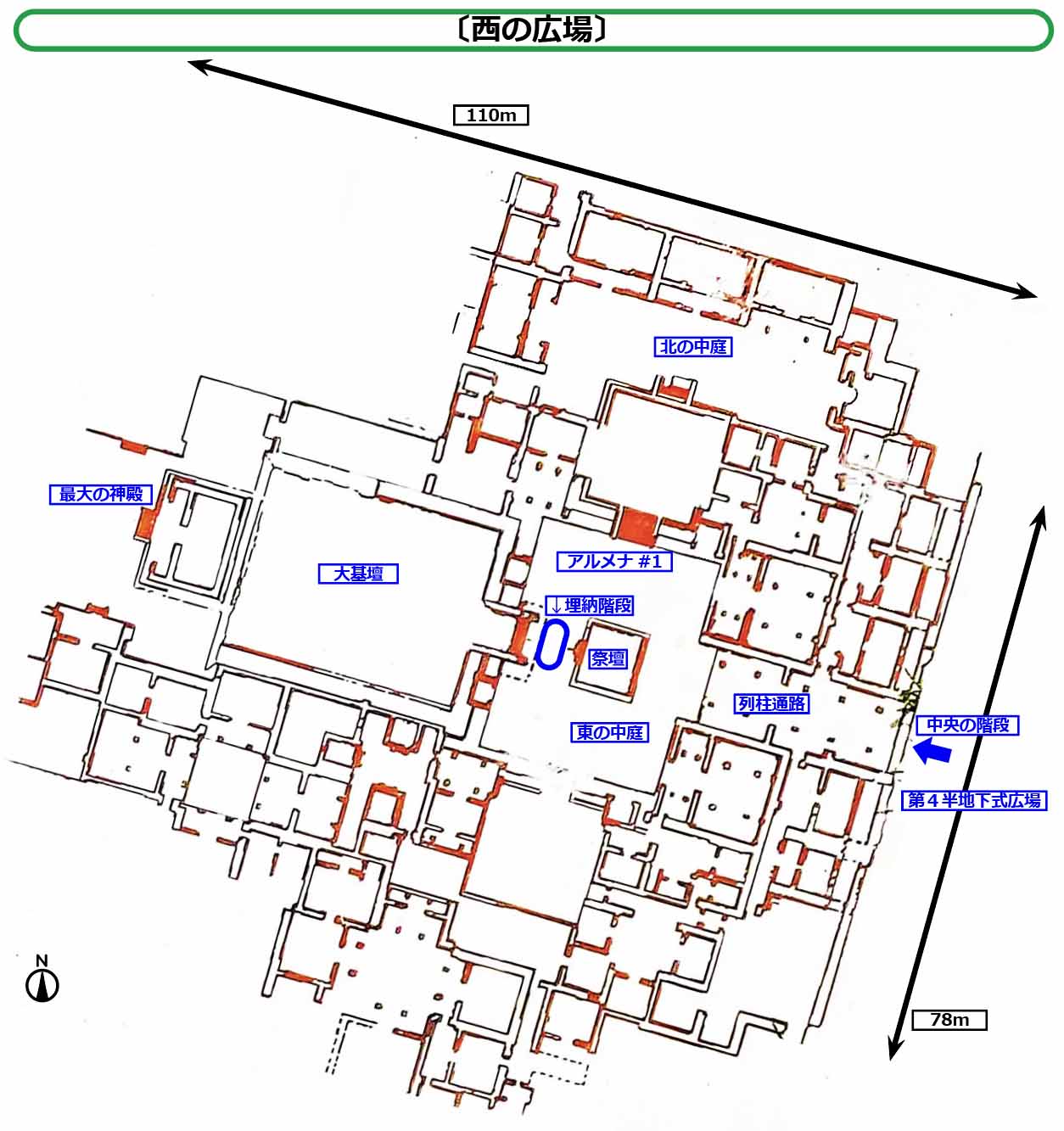
The left half (east) of the photo below is the fourth semi-underground plaza. Tourists go down there and then go up the central staircase visible in the upper left to the west (right).
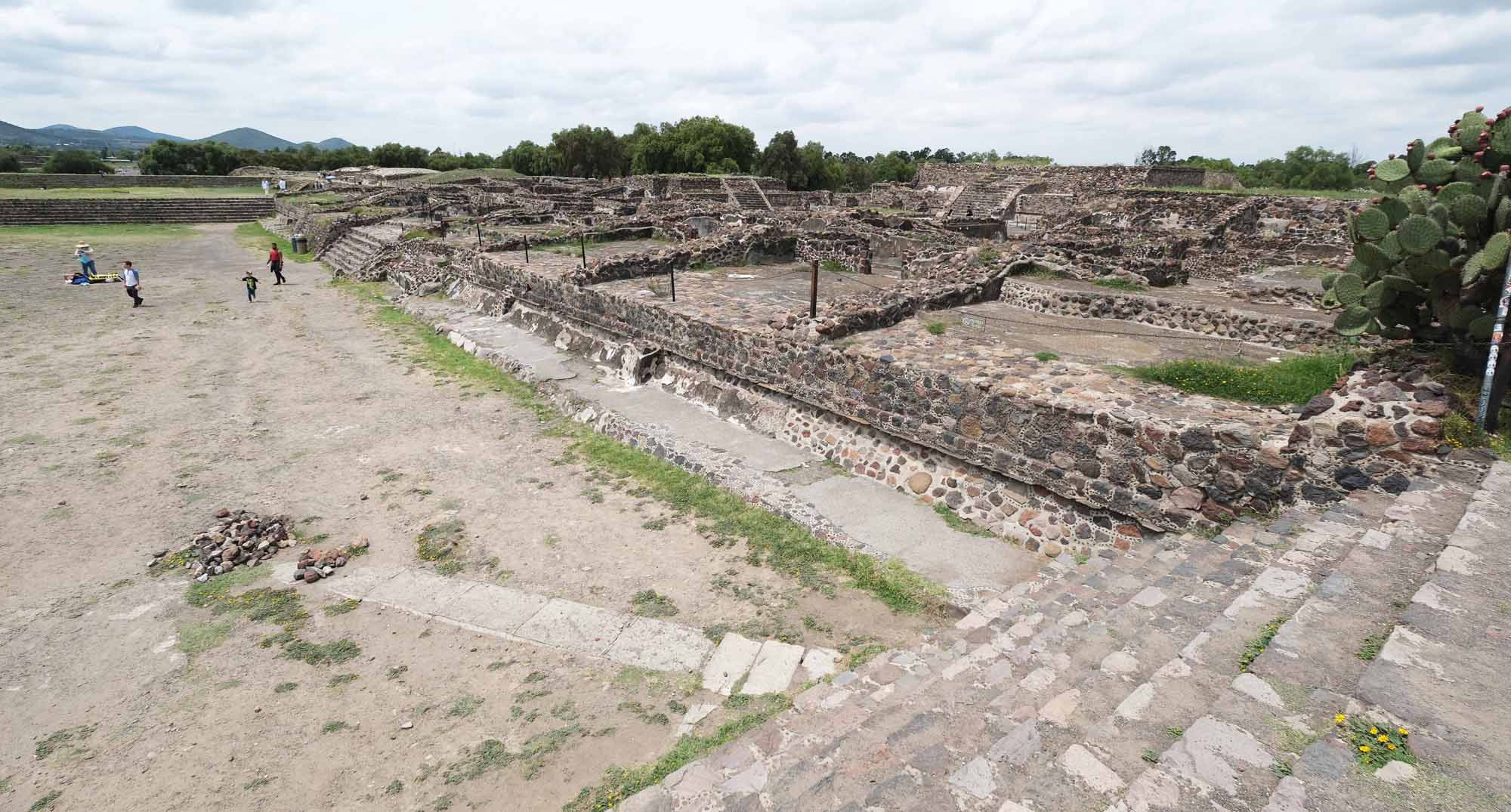
↑The fourth semi-underground plaza and the eastern half of the [West Plaza].
Before descending, take a look at the northern courtyard from the western end of the causeway.
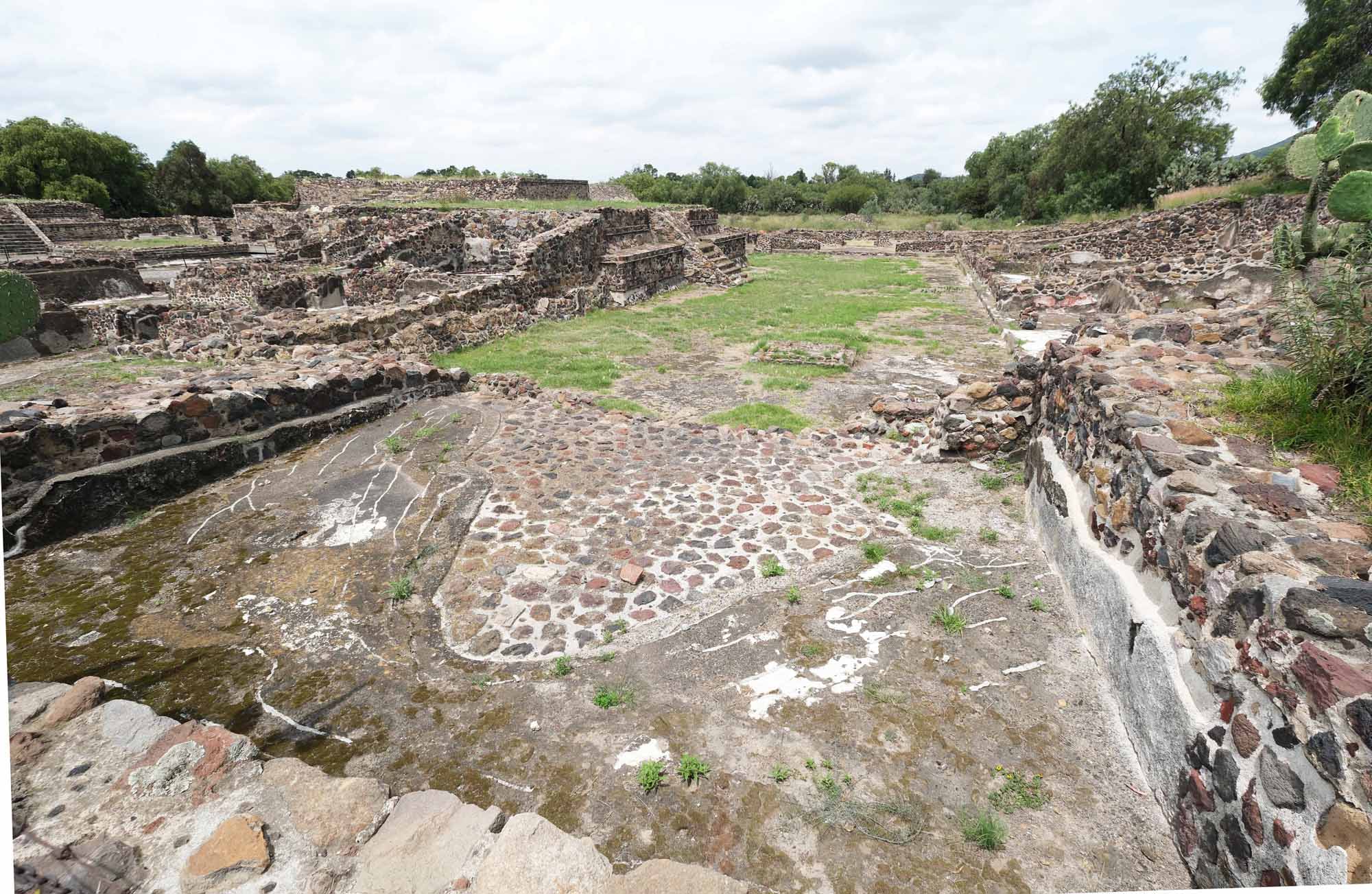
Now, let's get off.
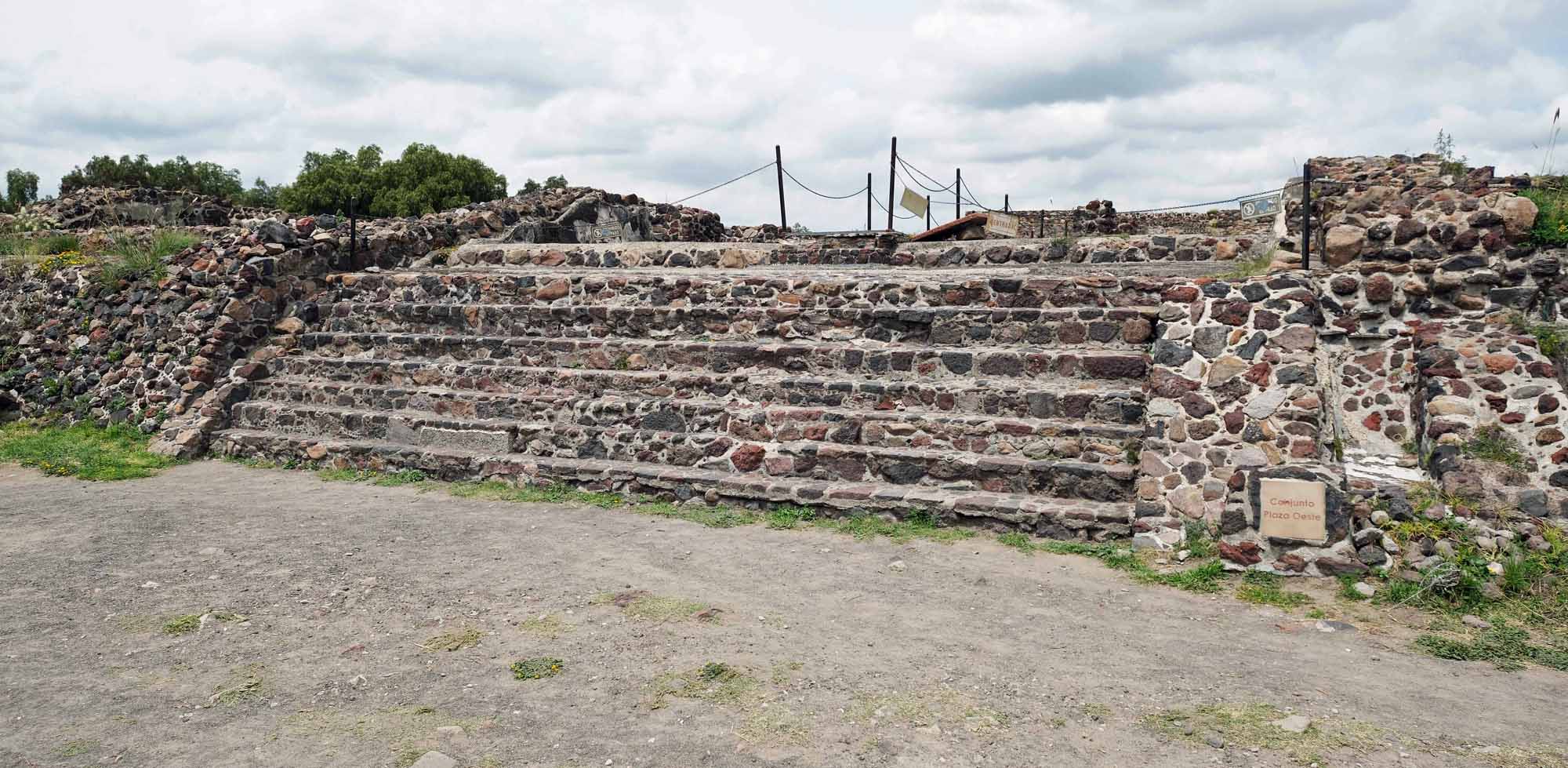
↑Central staircase.
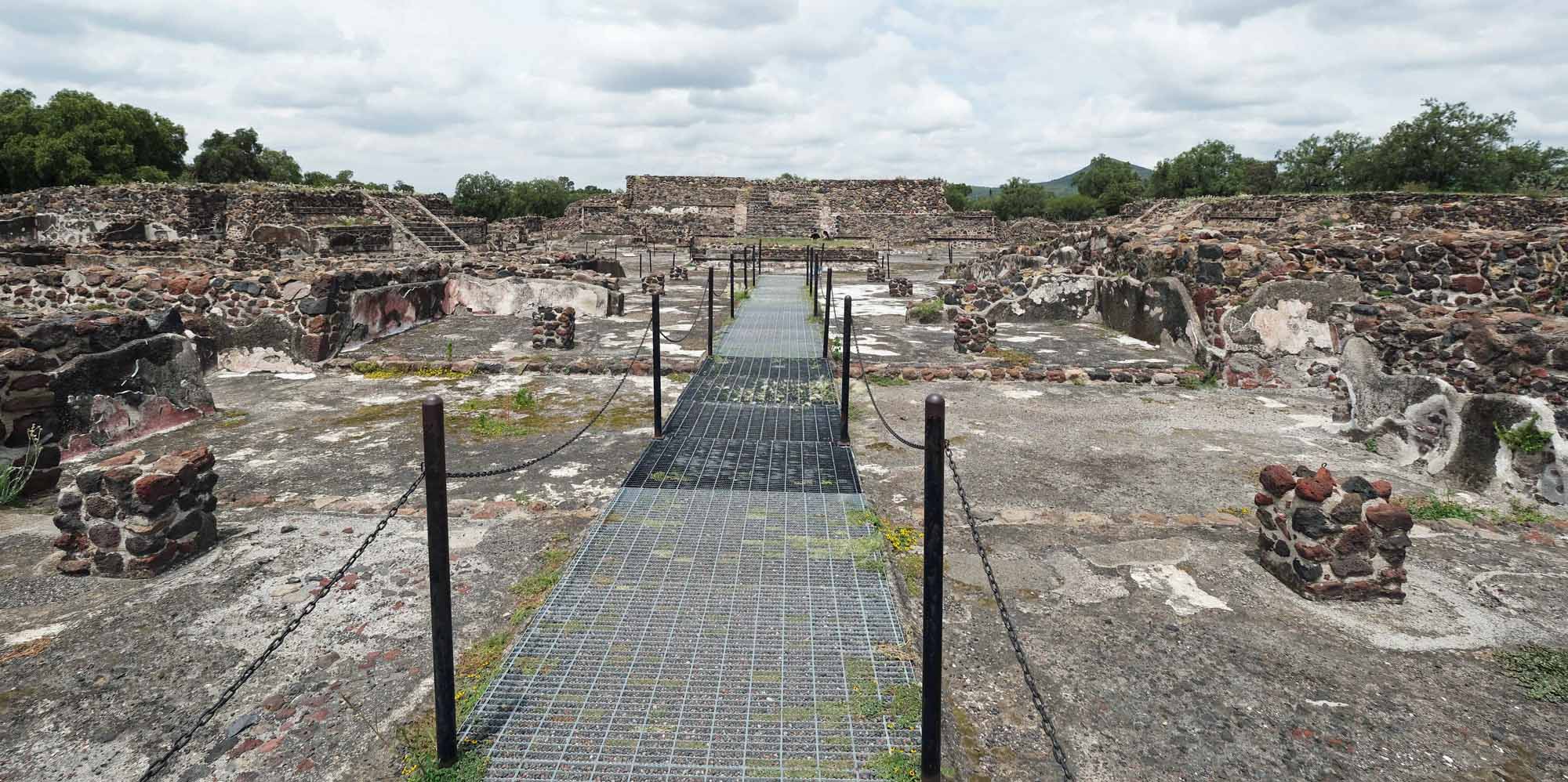
↑Colonnade passage.
The colonnade aisle heads west, and on both sides there are small, relatively partitioned buildings.
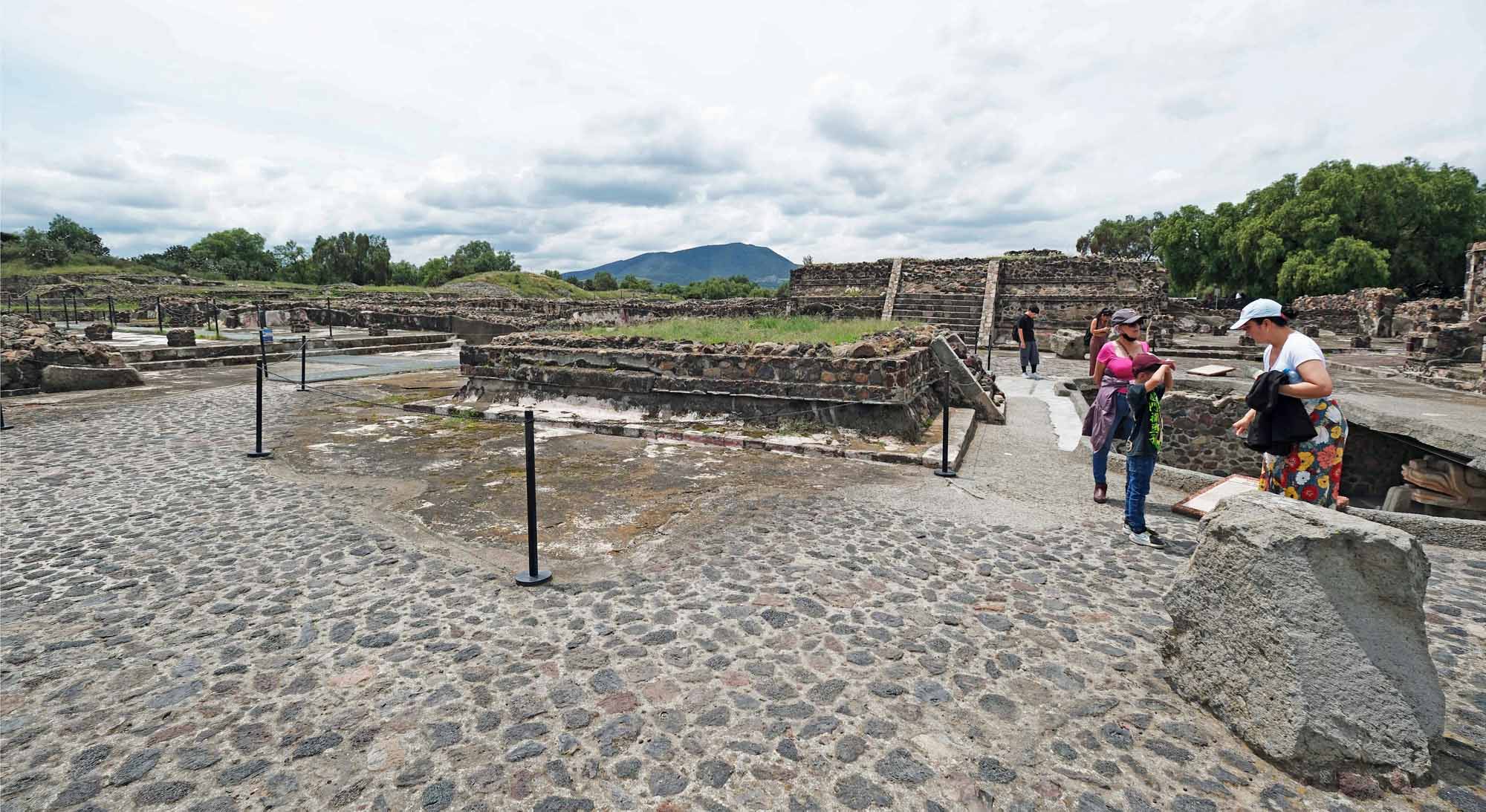
↑The eastern plaza and altar. In the back are the stairs to the large platform.
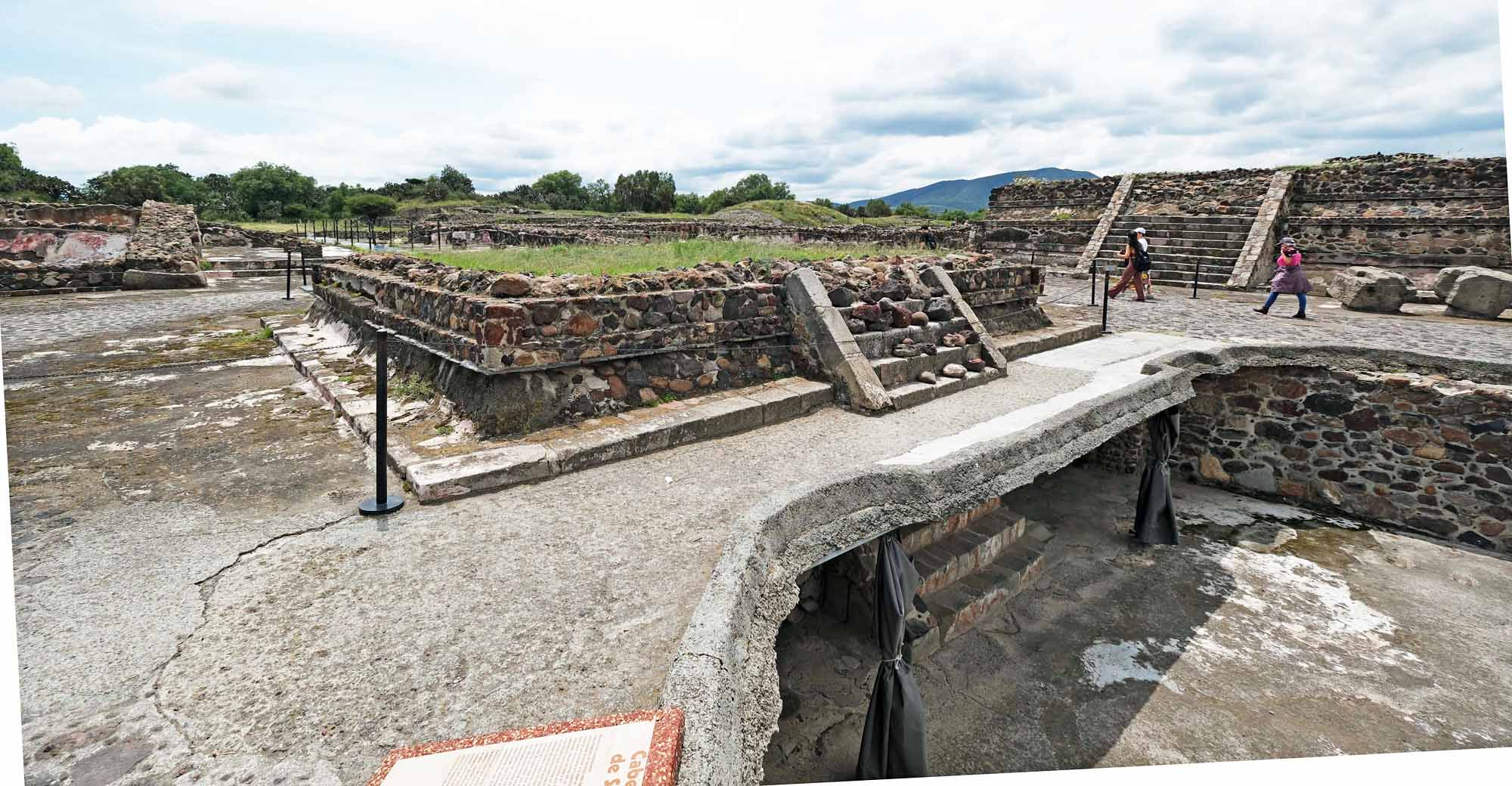
↑East side of the buried stairs. ↓West side of the buried stairs.
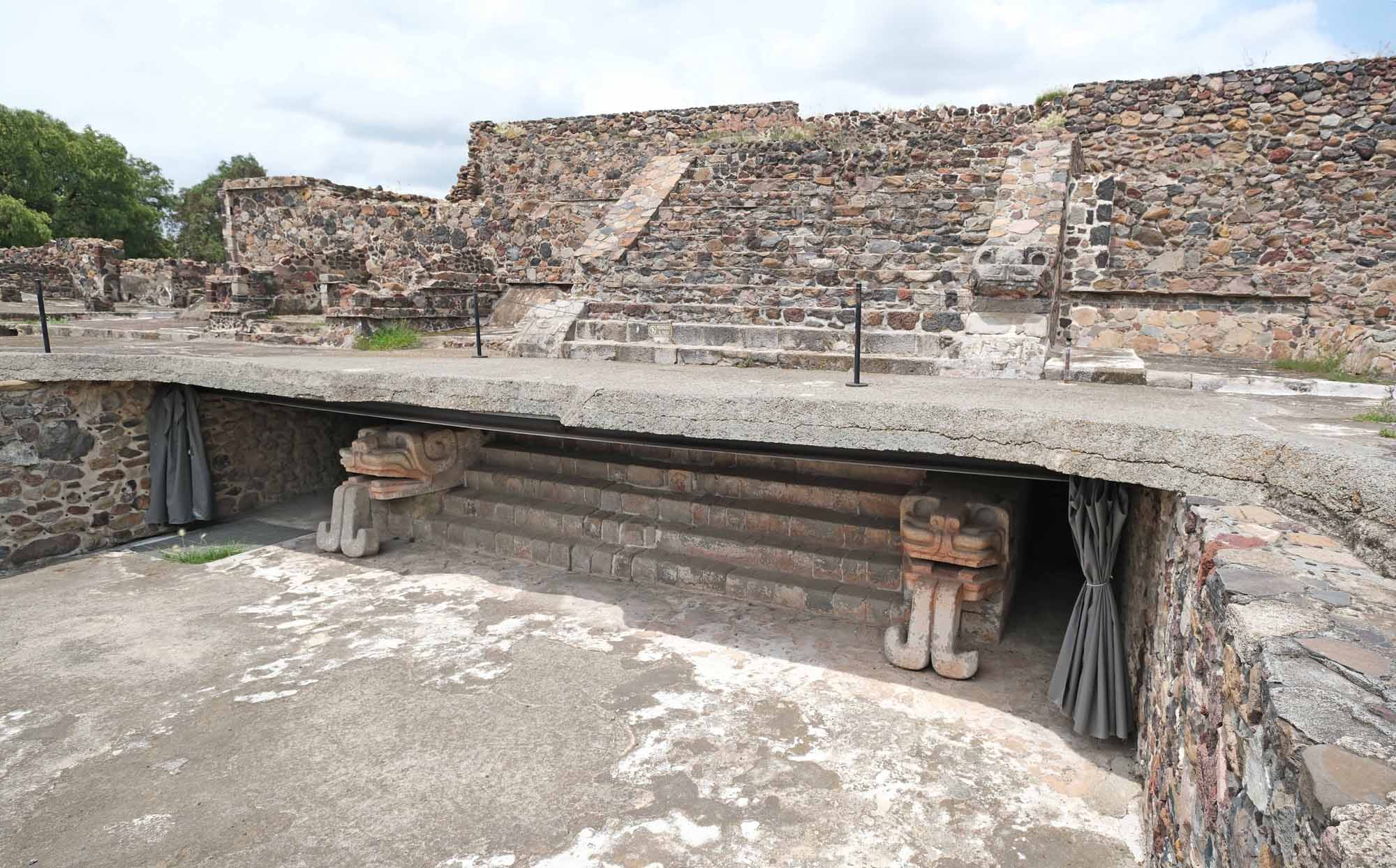
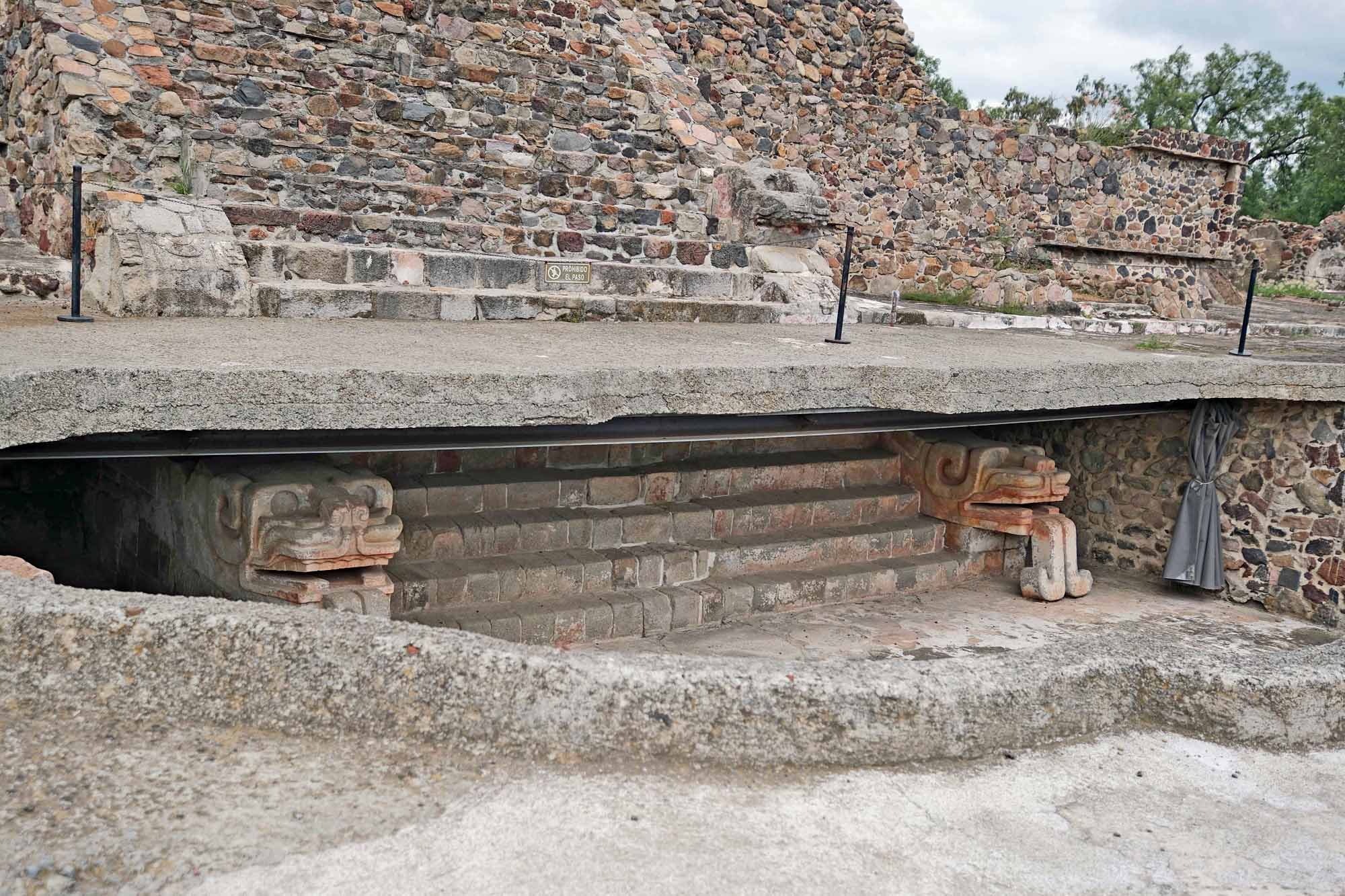
Archaeologists will carve out the plaster floor to reveal two layers from different eras.
1. The floor of the eastern courtyard in the earlier period was about 1.5m lower.
2. Judging from the stairs leading up to the east, the altar was small.
3. The stairs leading up to the west are at the same angle as those in later periods.
4. In earlier periods, feathered serpents were placed on both sides of the stairs, while in later periods, jaguars were installed.
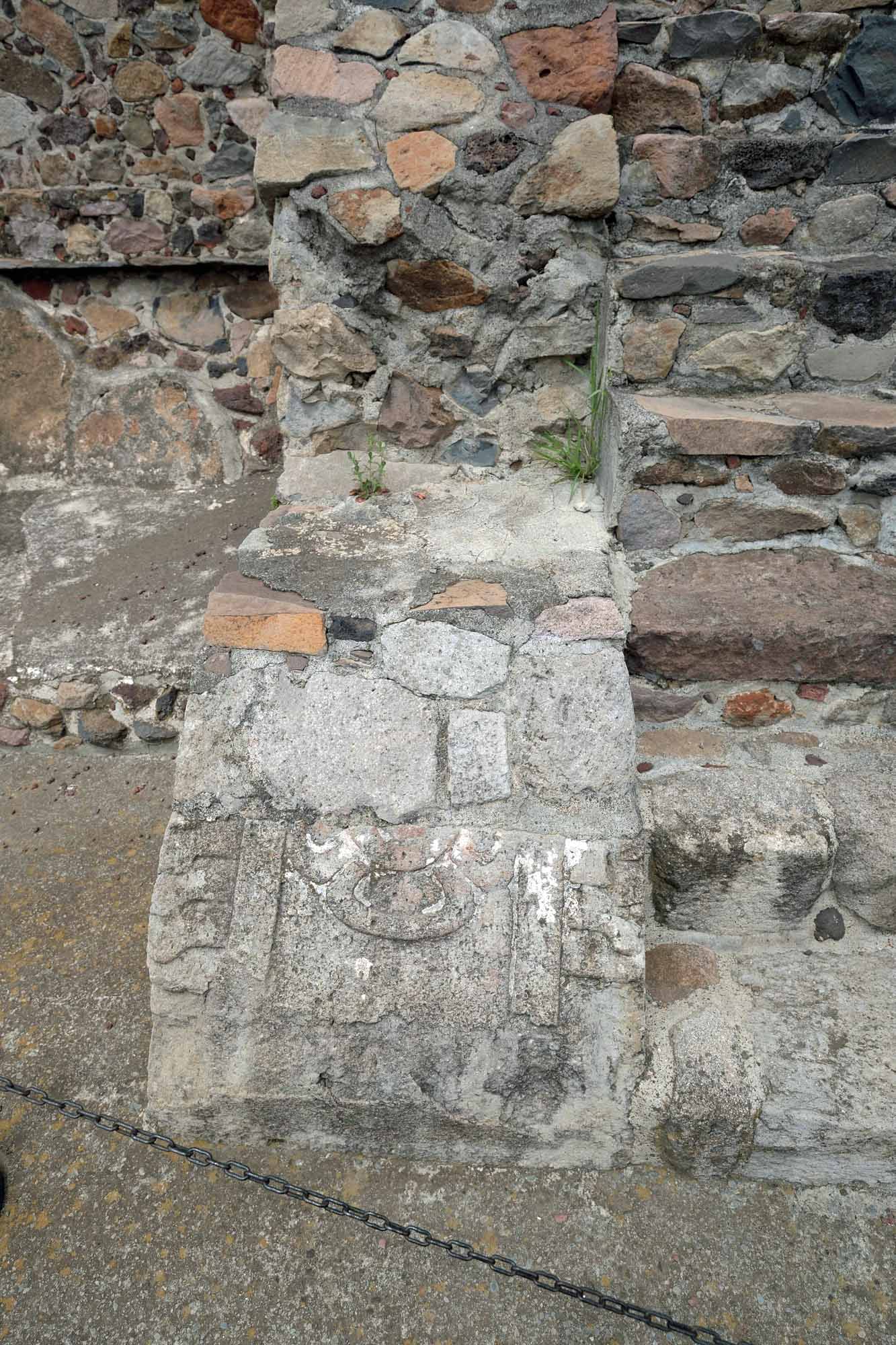
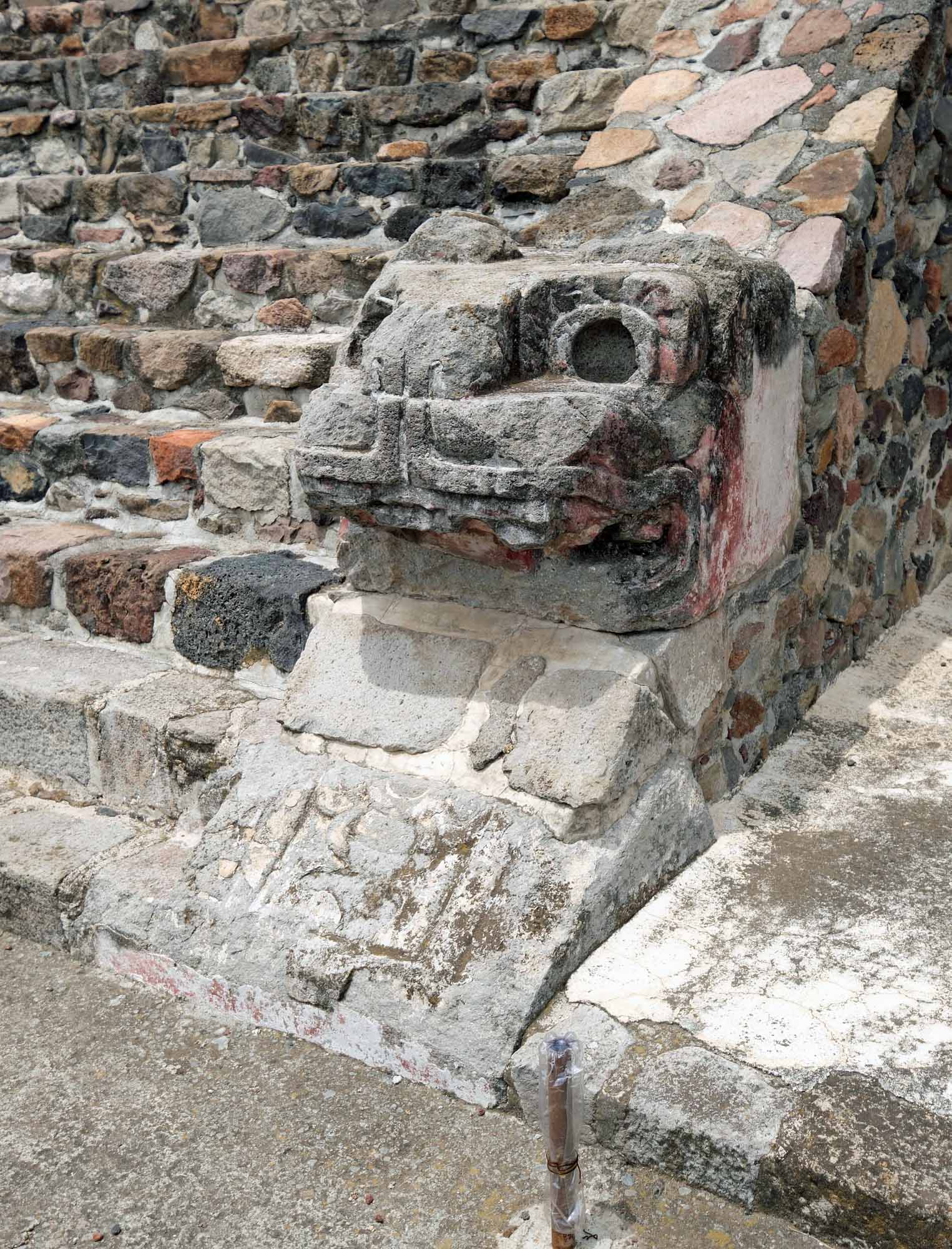
↑↑Jaguar sculpture from a later period.
The change in symbolism signifies a political upheaval. The exact date that separates the earlier and later eras has not been clearly reported, but it is likely related to the incident at the Temple of the Feathered Serpent in Ciudadela.
Let's look at it again from the southeast side.
An almena was found in the eastern courtyard. It is 93cm high. The design may be that the upper triangle represents rays of light and the lower circle represents a tlaloc. The two squares may represent a tablero, or building. It is also thought to be a nameplate for an official position. On the right is a pitcher featuring a large cat, the location of which is unknown.
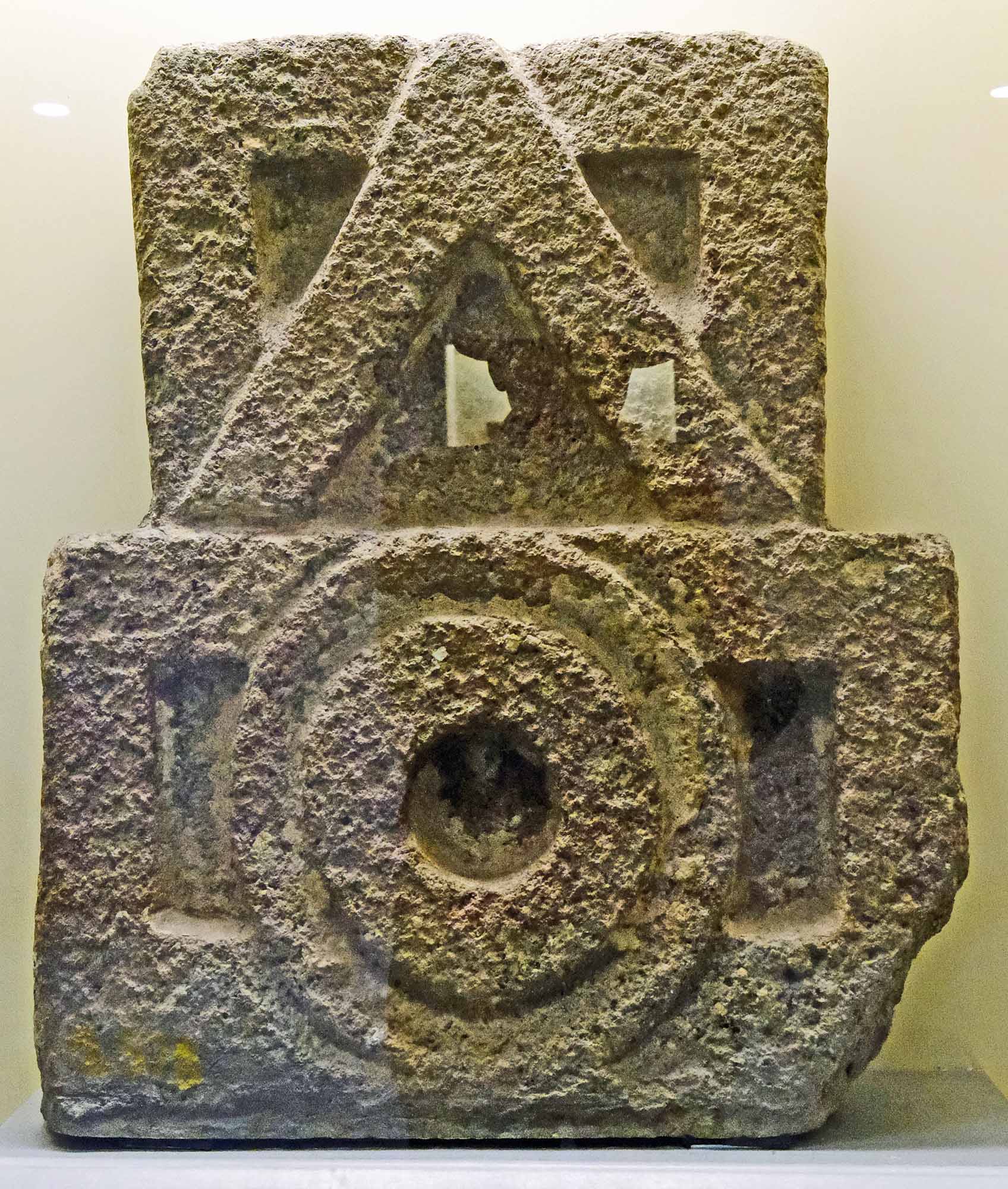
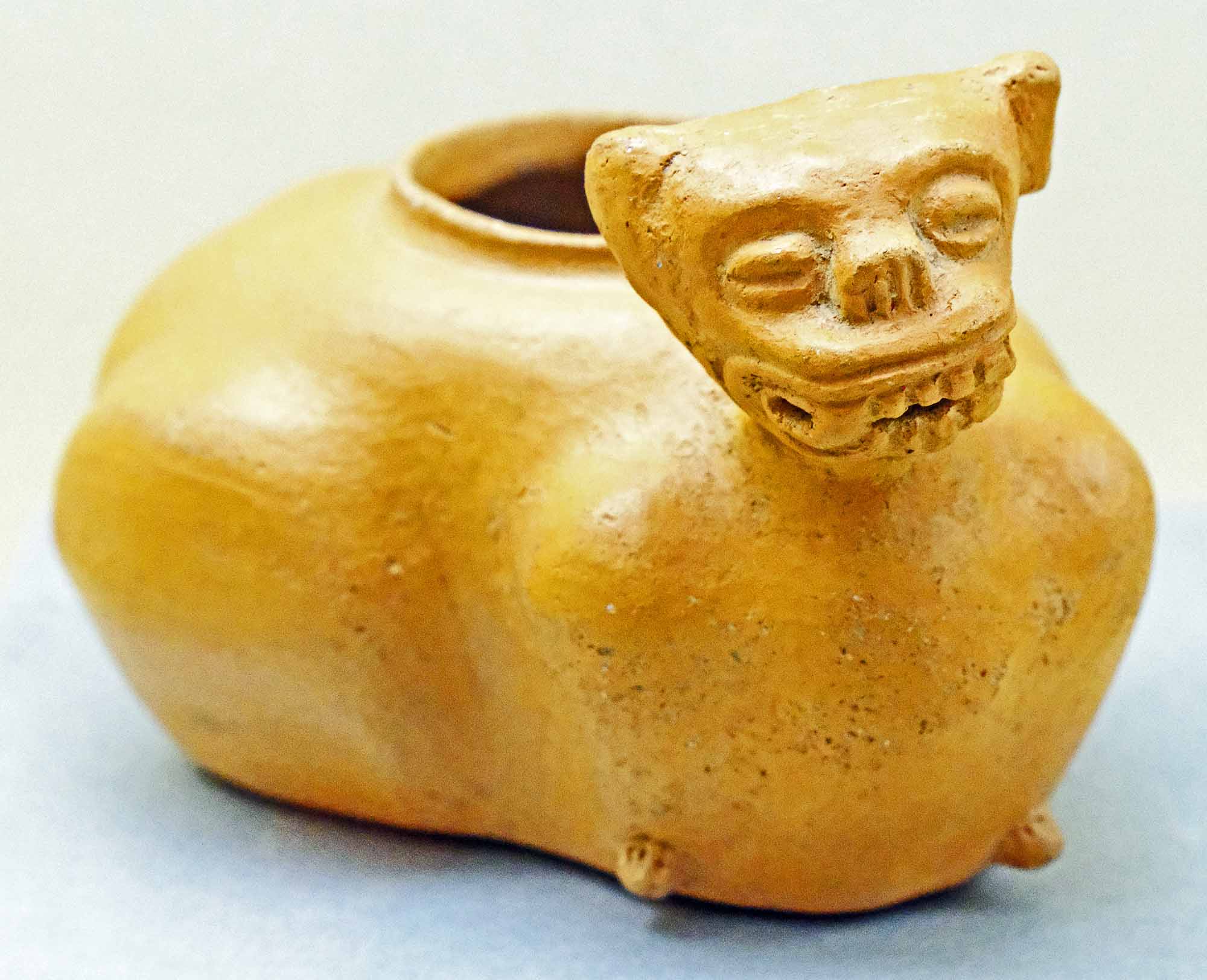
↑At the Mural Museum. ↑At the Cultural Museum.
The relief below is said to be of the god of agriculture. The location where it was excavated is not specified. It was probably carved into a single stone and several pieces were displayed side by side. It is thought that the pieces fell off, either intentionally or due to changes over the years, and broke into pieces and scattered. It is speculated that archaeologists collected the pieces and made a jigsaw puzzle out of them, which is why the exhibit has unevenness.
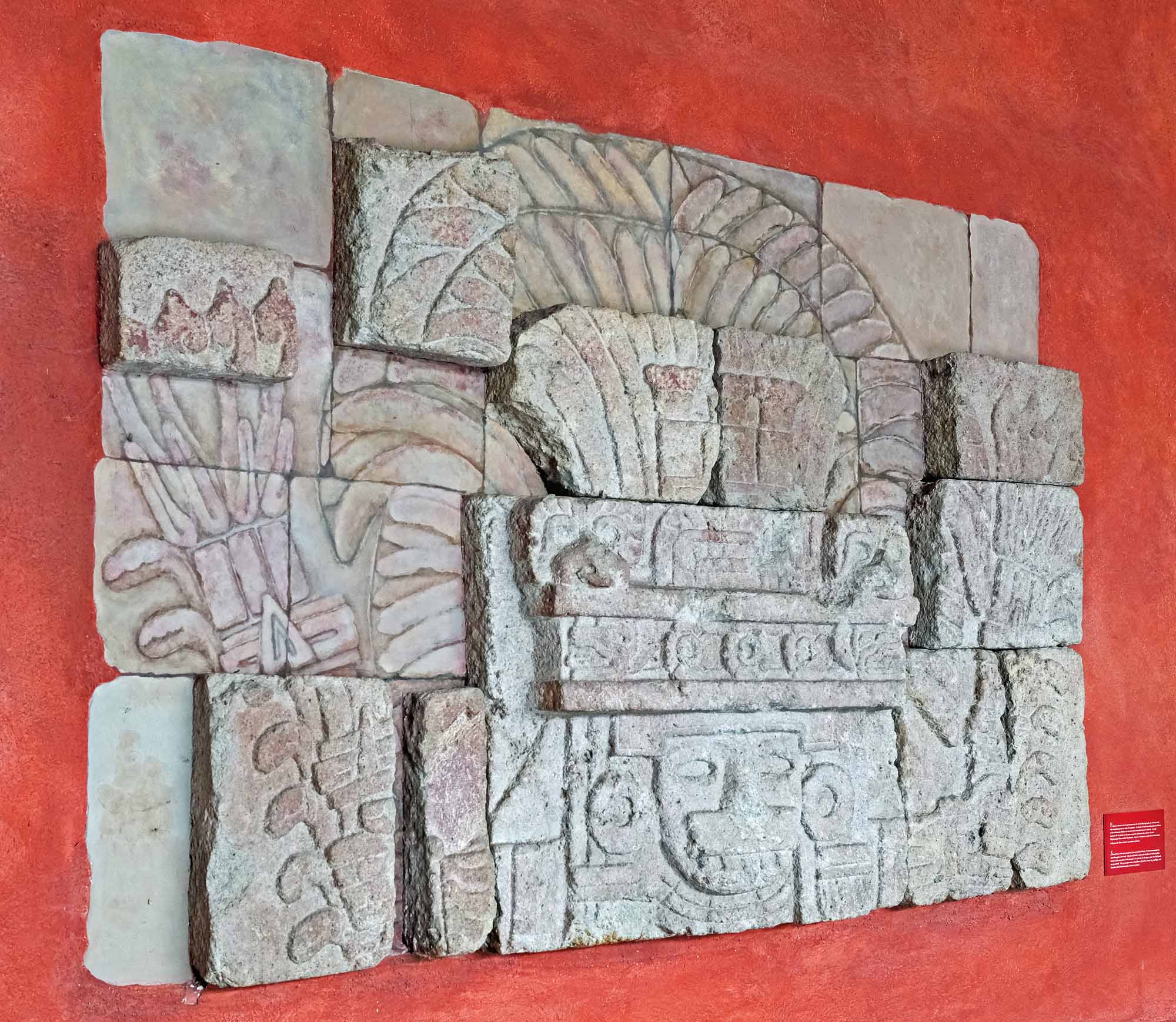
↑at Cultural Museum.
On either side of the lower tier of the headdress are small jaguars looking to the side, and on either side of the upper tier are birds looking forward. Drops of water are coming out of the bundles of grass and plants held in each hand.
Now let's take a look at the entire West Plaza.
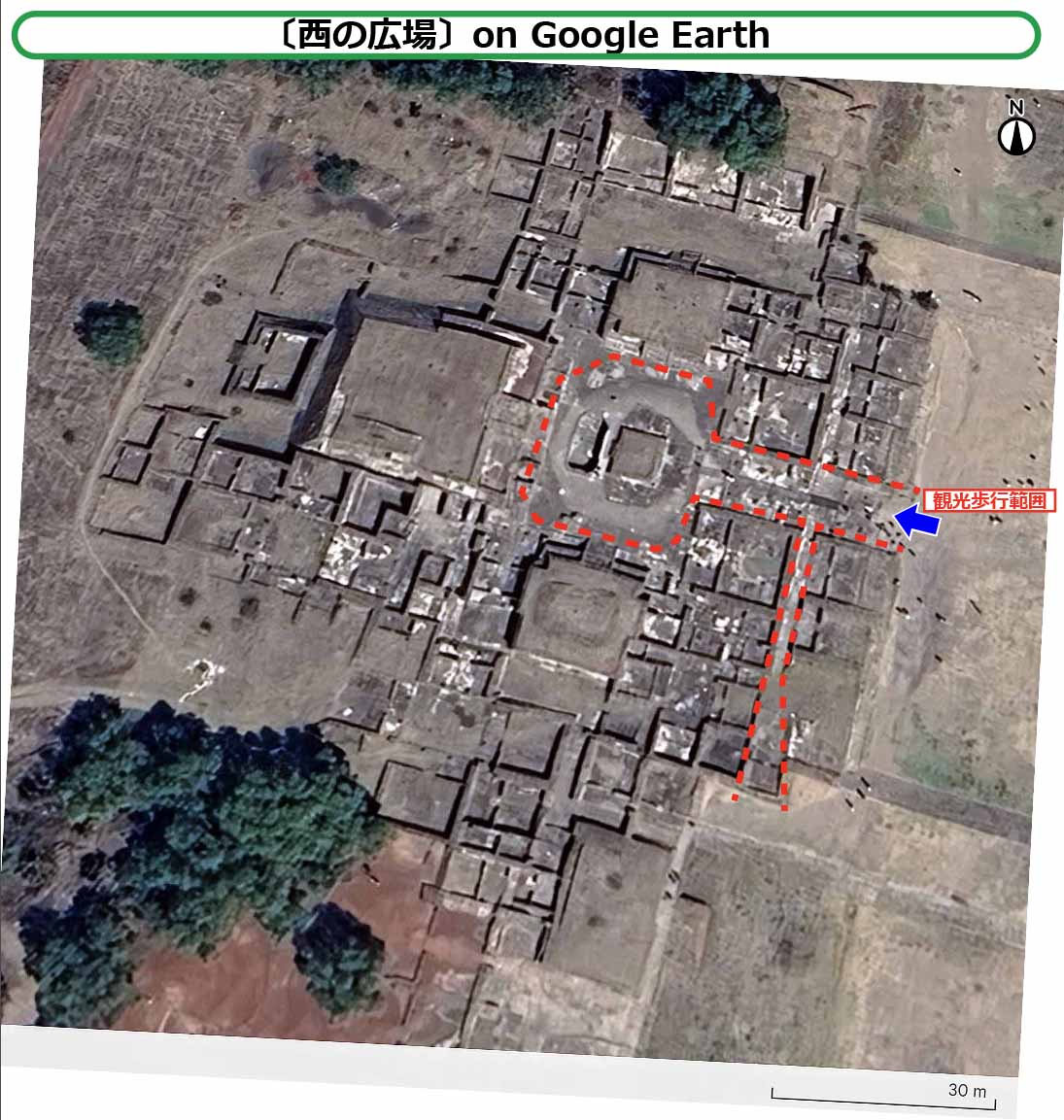
↑on Google Earth。
Tourists can walk within the area outlined by the red wavy line on the map above. Meanwhile, a Google Earth view shows a large, high platform and the largest temple on the west side along the east-west architectural axis. It's unclear what was on top of the platform. However, since the largest temple was accessed from the west side, it can be said that the front of the central temple/residence (in the west square) faced west.
Normally, the west side is the main entrance, but when rituals were held in the fourth semi-underground plaza, it is possible that participants would have participated in the procession from west to east, starting from the largest temple → large platform → eastern courtyard → colonnaded passage → central staircase.
If you head south from the West Square, you will soon see the red soil Rest Area on your right.。
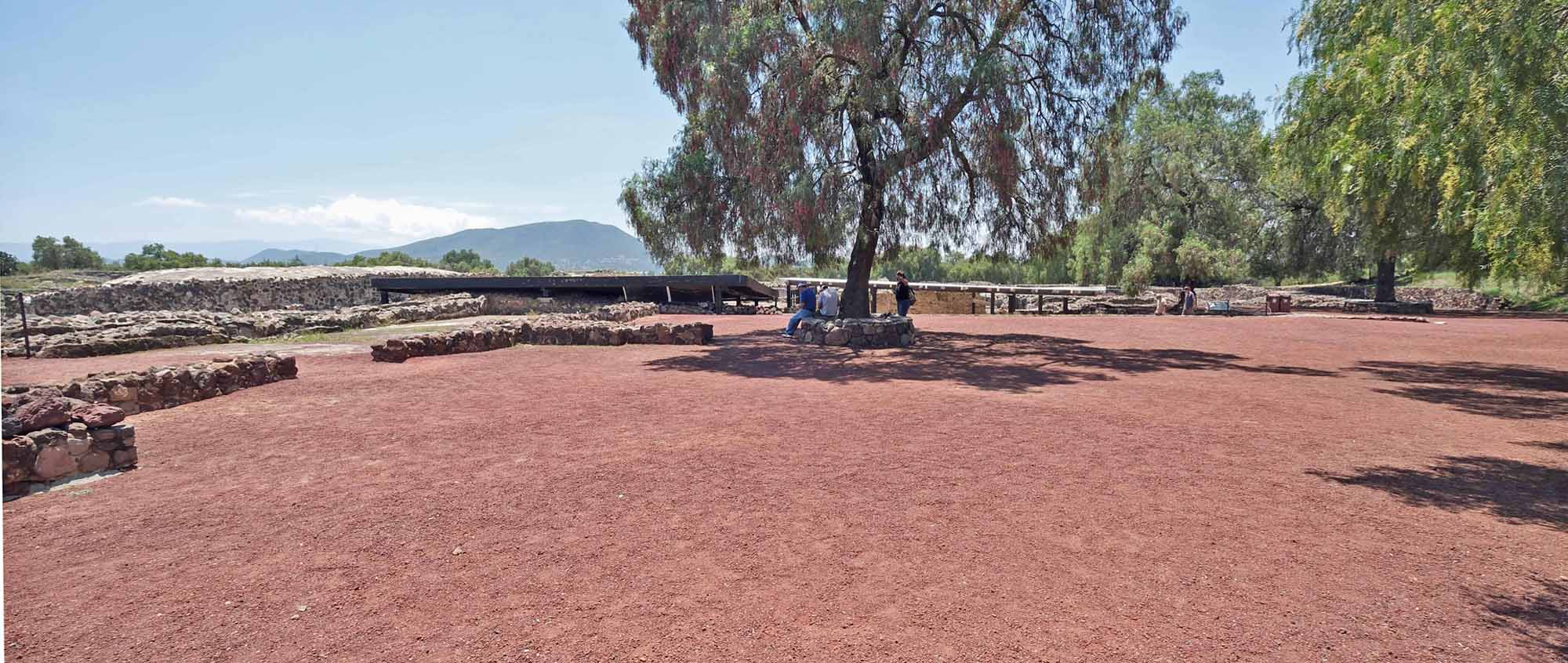
Unusually for an archaeological park, there are trees to provide shade and benches. In the center of the photo, under the edge of the long, narrow roof, is the Northern Temple, which belongs to the multi-story building.